
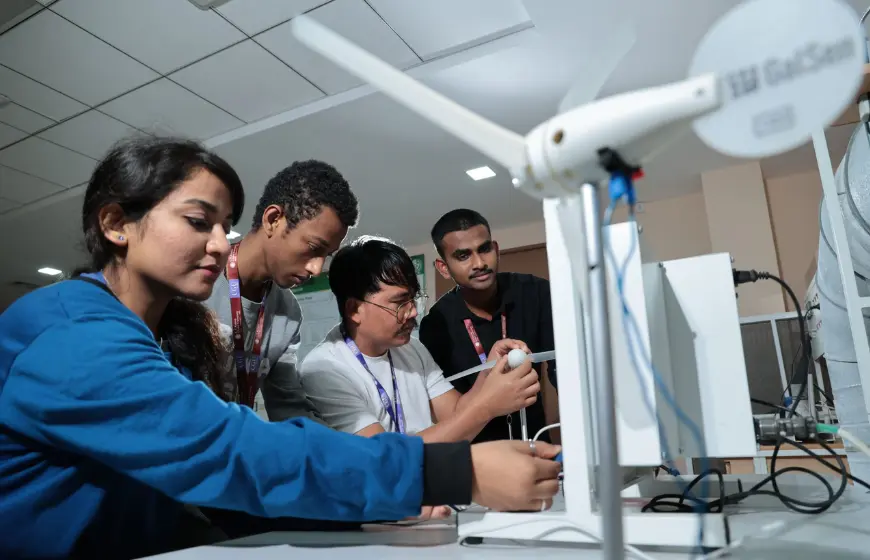

The Core Philosophy Behind EE and EEE
Electrical Engineering is deeply rooted in macro-level power infrastructure. It focuses entirely on generating, distributing, and utilizing massive amounts of electrical energy across national grids, hydroelectric plants, and heavy manufacturing units. In contrast, Electrical & Electronics Engineering bridges the gap between massive power systems and micro-level device control. EEE professionals study how to control those large electrical systems using compact microprocessors, semiconductor devices, and embedded software. If you want to build power plants, EE is your pathway; if you want to design the smart automation software that runs the power plant, EEE provides the necessary hybrid skill set.
Electrical Engineering vs EEE: Key Differences
| Feature | Electrical Engineering (EE) | Electrical & Electronics Engineering (EEE) |
| Primary Focus | High-voltage power, grid infrastructure, heavy machinery | Hybrid of high-voltage systems and low-voltage control electronics |
| Scale of Work | Macro (Transformers, generators, national power grids) | Micro to Macro (Embedded systems, smart grids, robotics) |
| Primary Industry | Public Sector Undertakings (PSUs), Energy, Railways | IT, Telecom, Semiconductor, Automation, EV Manufacturing |
| Software Use | SCADA, AutoCAD Electrical, PowerWorld Simulator | MATLAB, VLSI design tools, Simulink, Embedded C |
Core Syllabus and Specializations
- EE Power Systems (30 Credits): Comprehensive study of high-voltage transmission, grid stability, and distribution networks.
- EE Electrical Machines (25 Credits): Deep dive into the mechanics and physics of industrial motors, alternators, and heavy transformers.
- EE Renewable Energy (15 Credits): Specialized modules on solar infrastructure, wind turbine grid integration, and sustainable energy storage.
- EEE Microcontrollers (20 Credits): Programming and designing compact logic circuits for smart devices and automation hubs.
- EEE Digital Signal Processing (15 Credits): Advanced mathematical manipulation of signals for telecommunications and sensor networks.
- EEE VLSI Design (15 Credits): Creating integrated circuits and semiconductor chips used in modern consumer electronics.
Top Institutions and Placement Credentials
- Institution Accreditations: Top tier blended programs are hosted by universities holding NAAC A++ and A+ grades alongside Top 100 NIRF Engineering rankings.
- AICTE Approval Status: Leading institutes strictly carry distinct AICTE extension of approval for "B.Tech for Working Professionals" lateral entry programs.
- Placement Network Size: Premier university networks feature over 15,000 active alumni placed globally across core technical domains.
- Hiring Partners: Leading programs boast 350+ active recruiters, including major conglomerates like L&T, Tata Power, Siemens, and BHEL.
- Career Differentiators: Integrated industry certifications, such as specialized SCADA operational training and Washington Accord recognized curriculums, are frequently bundled with the core degree.
AICTE Regulations on Online Engineering Degrees
It is crucial to understand that a purely 100% remote Online Electrical Engineering degree holds no legal validity in India. The All India Council for Technical Education (AICTE) and the Supreme Court mandate that core engineering programs require hands-on physical laboratory work. To accommodate employed individuals, regulators approved the Work Integrated Learning Program (WILP) or blended B.Tech format. This legally valid model allows students to consume theoretical lectures virtually on weekends but mandates attendance for physical practical sessions on campus. Platforms like University Vidya specialize in guiding students exclusively toward these AICTE-approved blended pathways, safeguarding them from invalid distance education scams.
Detailed Comparison Chart
| Assessment Area | Electrical Engineering (EE) | Electrical & Electronics Engineering (EEE) |
| Government Job Preference | Highly preferred for core state electricity boards and heavy PSUs | Preferred for automation, defense research, and telecom PSUs |
| IT Sector Transition | Challenging; requires separate coding upskilling | Seamless; curriculum naturally includes C/C++ and logic design |
| Electric Vehicle (EV) Sector | Focused on the heavy charging infrastructure and battery scaling | Focused on battery management software and internal dashboard electronics |
| Higher Studies (M.Tech) | Direct pathways into Power Engineering and Thermal Sciences | Pathways into Robotics, VLSI Design, and Artificial Intelligence |
Choosing the Right Upskilling Pathway
Your final decision must be driven by your current industry and desired future trajectory. Mechanical and civil infrastructure professionals looking to shift into energy generation should lean toward traditional EE. Conversely, those fascinated by the Internet of Things (IoT), electric vehicles, or robotics will find the EEE curriculum far more relevant to their daily tasks. Before committing to either branch, consulting with educational verification platforms like University Vidya ensures your chosen Online Electrical Engineering or EEE program possesses the exact regulatory approvals needed for lateral career movement, government exam eligibility, and corporate promotions. Placement assistance is robust across accredited programs, though exact career outcomes will ultimately depend on your individual academic performance and prevailing market conditions.